For many families, there eventually comes a difficult conversation about an aging parent or grandparent: Is living alone still the best option?
Too often, that question immediately leads to another: Is it time for assisted living?
For some older adults, assisted living is absolutely the right answer. These communities can provide meals, social activities, transportation, housekeeping, supervision, personal care, and other services that would be difficult to replicate at home. When someone’s health and safety require that level of support, the benefits can justify the cost.
But needing some occasional help, struggling with stairs at home, or simply wanting to live closer to family does not necessarily mean it’s time to give up independent living.
There is another option worth considering: an Accessory Dwelling Unit, or ADU.
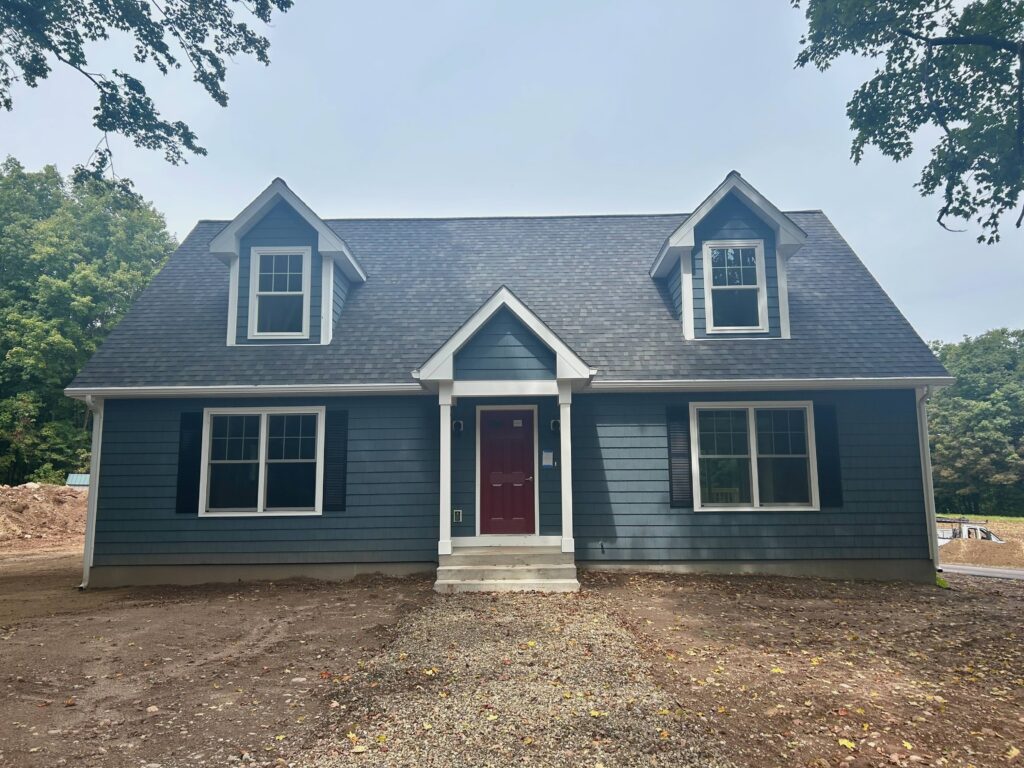
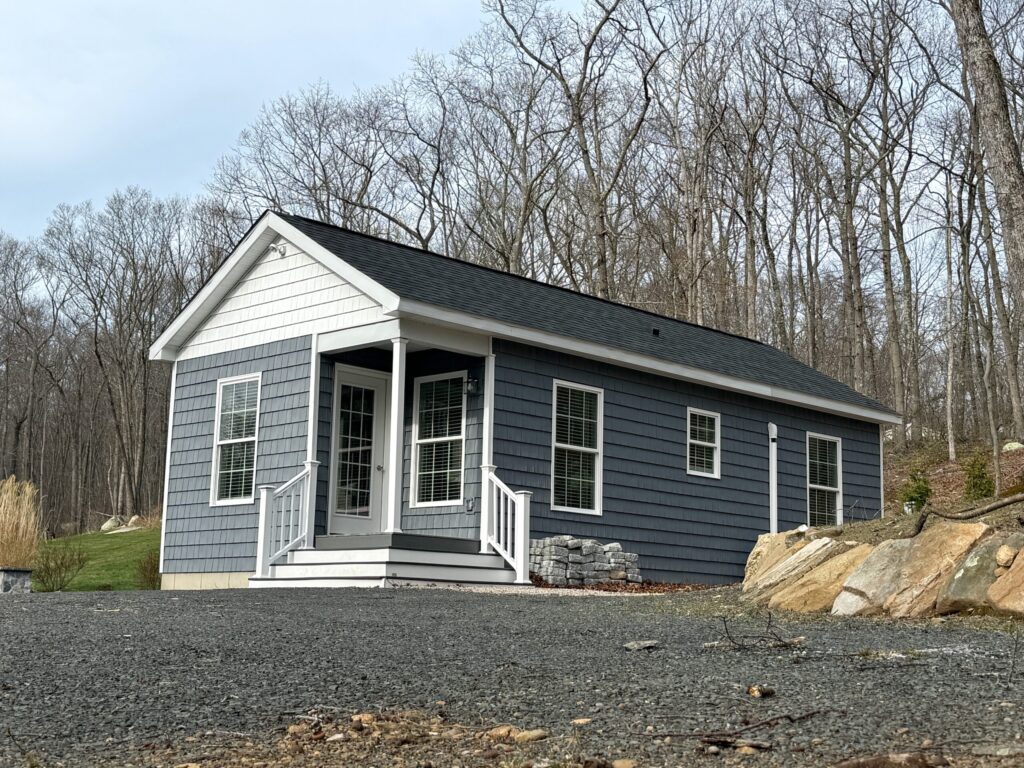
An ADU can provide a comfortable, appropriately sized, private home on the property of an adult child or other family member. For the right family, it offers something that can be difficult to find elsewhere— independence and proximity at the same time.
But Building is Expensive!
The financial comparison is a natural place to start.
Assisted living costs can vary by location and level of care, but suppose a family is considering a community costing $6,000 per month, which, while it sounds like a huge number, is the approximate average in Connecticut. That’s $72,000 per year.
Now consider an ADU costing approximately $300,000. Depending on interest rates, down payment, taxes, and insurance, a family might budget $3,000 per month as a reasonable financing figure for a 15-year, fixed-rate mortgage on a project of this size.
Comparing $3,000 vs $6,000 is obviously compelling. But that comparison does need an important qualification— the two payments don’t purchase the same thing.
Assisted living fees often include services that an ADU mortgage does not. An ADU also comes with expenses of its own: utilities, taxes, occasional maintenance, and potentially the cost of eventual in-home care.
So, this should not be viewed simply as a “$3,000 vs $6,000” decision. A better way to frame it may be: What do you have after making those payments?
Assisted living is primarily a service expense. You are paying for the services provided by a business— the company that owns the facility/community.
An ADU is different. It’s a real estate investment. A significant portion of the money spent creates a physical improvement to property owned by the family. That distinction deserves consideration.
Turning Expense into Investment
Imagine an adult family member has room on their property for an ADU. By providing the land and offering their support as needed, they are doing something hugely generous— they are welcoming an older generation into the rhythm of their everyday life.
But that generosity doesn’t necessarily have to flow in only one direction.
The older generation may contribute towards creating a beautiful, functional, lasting home on the property. That dwelling may eventually become a valuable asset for the next generation. When it’s no longer needed by Mom/Dad/Grandma/Grandpa, the ADU might someday house another family member, become a guest residence, or produce significant rental income.
A well-designed ADU will enhance the utility and practicality of the property, and in turn, will increase the value of the family’s land. While the goal of building an ADU isn’t necessarily financial return, money spent on an ADU absolutely does create something tangible and valuable that remains with the family.
Instead of thinking only about the cost of aging, families can begin thinking about how some of those resources might be reinvested across generations.
Independence Matters
The strongest case for an ADU, however, has little to do with money. It has to do with independence and quality of life.
A home is more than just where we live. It’s the place where we establish the routines that make everyday life our own.
For an older adult who is still capable of living independently, a thoughtfully designed ADU can preserve those familiar routines while eliminating many of the burdens associated with a larger, older home. A smaller residence can be designed specifically for aging in place: fewer stairs, accessible bathrooms, wider doors, easy-to-reach cabinets, switches, and hardware, and many other features that can make everyday living safer and simpler.
Consistent routines are widely recognized as a key contributor to longevity, but the objective isn’t merely to help someone live longer— it is to preserve the independence, familiarity, and sense of purpose that make this later stage of life feel like their own.
When “Visiting Grandma” Becomes “Seeing Grandma”
There is another benefit to ADU-living that is almost impossible to quantify.
Consider what happens when Grandma lives in an assisted living community, say 30 or 45 minutes away. Seeing her becomes an event. Everyone piles into the car, drives across town, and the family spends a couple of hours together before saying goodbye and heading home. Everyone may enjoy the visit, but it is still a visit.
Now imagine Grandma lives across the backyard.
A grandchild wanders over after school for a snack. Dad stops in for ten minutes to cool off while he’s doing yardwork. Grandma hears everyone outside and joins them on the patio.
These aren’t scheduled visits, and don’t require planning or preparation. They’re just regular everyday life.
That may be the single most overlooked benefit of multigenerational living. Proximity doesn’t just allow families to see one another more frequently, it changes the kind of time they spend together.
And because an ADU is a separate home, proximity doesn’t necessarily require sacrificing privacy. Both generations can enjoy time together, but both can also close their own front doors when they want time apart.
Independence and Assistance Can Coexist
One of the biggest misconceptions about aging is that independence and assistance are opposites. In reality, they are not. An older adult may be perfectly capable of living in a private residence while still needing help with certain things.
Perhaps someone comes in once or twice a week to help with housekeeping. Later, a home health aide might assist with personal care. A visiting nurse, physical therapist, meal service, or other professional can potentially provide services in an ADU just as they would in another private home.
And having family just a few steps away can provide another layer of support. There are countless small tasks that don’t require a professional caregiver but can become frustrating as we age: carrying groceries, shoveling a walkway, cleaning a pet’s litterbox, figuring out a new device, or getting a ride to an appointment.
Family proximity can make those pain-points much easier without turning an adult child into a full-time caregiver.
And that last point matters; families considering an ADU should have realistic conversations about boundaries, expectations, finances, privacy, and caregiving responsibilities before making the decision. Living nearby can make helping easier, but it should not automatically mean that adult children assume responsibility for care they aren’t equipped to provide.
Professional assistance can still be brought in as needs evolve. In other words, an ADU doesn’t require choosing between independence and support— it can provide a way to have both.
Sometimes Assisted Living Will Still Be the Right Choice
An ADU isn’t the answer for everyone. Some older adults benefit enormously from the social environment of a senior community. Others require medication management, extensive assistance with daily activities, memory care, continuous supervision, or medical support that may be impractical to provide in a private residence.
Family circumstances matter, too. Not every property can accommodate an ADU. Zoning and permitting rules vary. Construction can be disruptive. Financing must make sense. Family relationships and expectations need to be healthy enough for living in close proximity to work.
And an ADU doesn’t eliminate the possibility that assisted living or another level of care may eventually become necessary. It may, however, postpone that transition.
Those additional years of independent living, surrounded by familiar routines and close to the people who matter most, can have value that is difficult to express on paper.
Add One More Choice to the Conversation
For a long time, families have tended to think about aging in two stages. First, Mom/Dad/Grandma/Grandpa stays in the family home for as long as possible. Then, when maintaining that arrangement becomes too difficult, the family begins looking at senior communities.
ADUs introduce another possibility: Change the home without giving up the independence of having one. Downsize without becoming distant. Accept help without surrendering privacy. Live near your children without living with your children.
And potentially redirect a meaningful portion of the money that would otherwise be spent entirely on senior housing toward something that remains within the family.
There may eventually come a day when assisted living, memory care, or skilled nursing is exactly what’s needed. Those options exist for good reason. However, that decision doesn’t have to be made prematurely simply because the old house has become too large, too isolated, or too difficult to maintain.
Before concluding that independent living has reached its end, perhaps families should consider another path— adding an Accessory Dwelling Unit to their property.