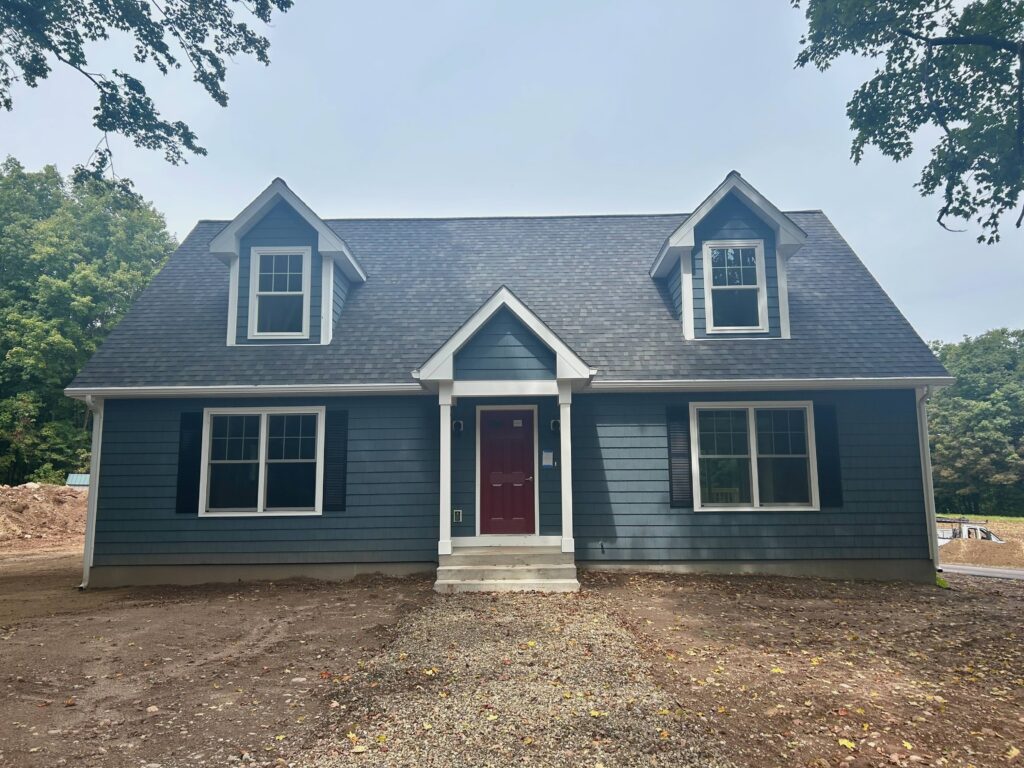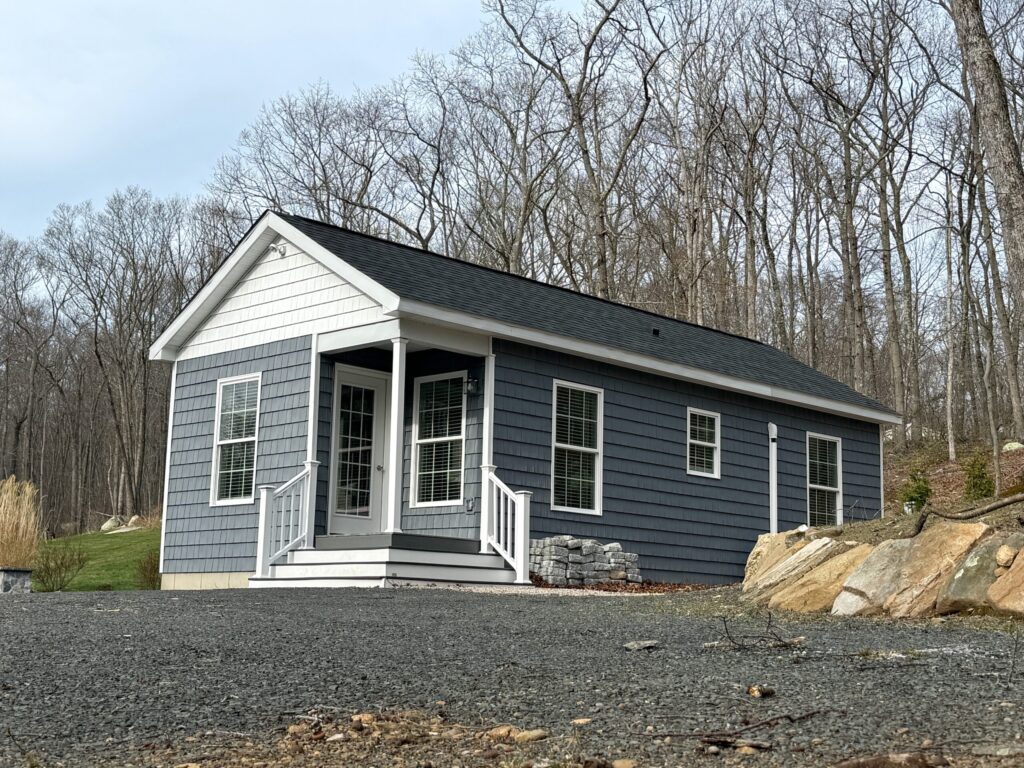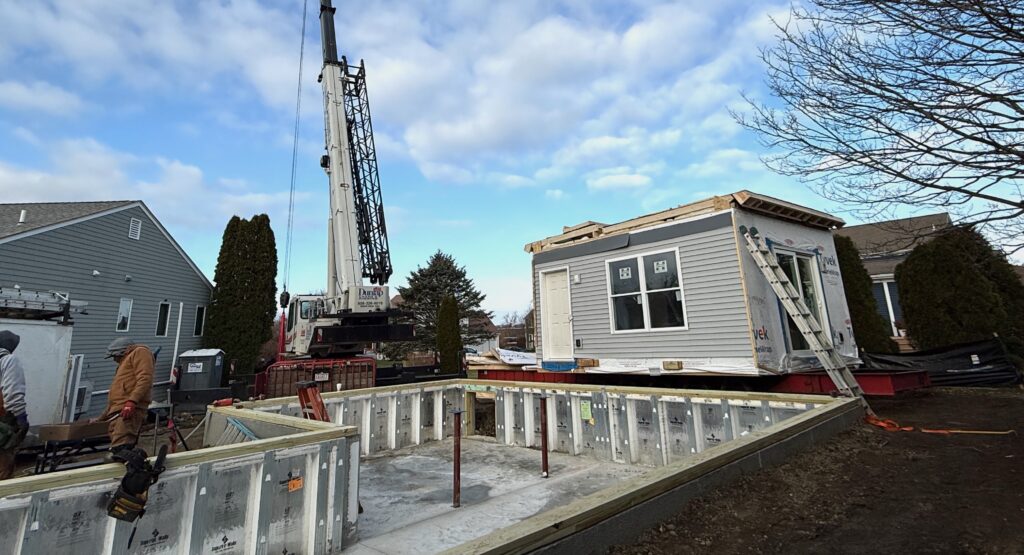
One of the most defining and attractive aspects of modular home construction is the expedited timeline to move-in. Modular delivery & set takes place just 10-12 weeks after we’ve ordered the house from our factory. With all the excitement and build-up surrounding the set, it’s easy for a homebuyer to feel like it’s the finish line they’ve been so eagerly looking forward to. However, the reality is this: While the house may look complete, there is still quite a bit of work to be done. At a bare minimum, homebuyers should expect 8 weeks from delivery until they can move in.
What Work Must Be Done Following a Modular Home Delivery in Connecticut or Rhode Island?
The first to-do is Finish Carpentry. This is an umbrella term and includes the following: Installing any siding, trim, flooring, and doors that could not be installed at the factory. Install floor transition plates. Adjust all doors including cabinet doors. Install stairs from first floor down into the basement. Identify and repair any drywall cracking that may have occurred during transport.
But Finish Carpentry is only the beginning of the on-site punch list. Next, utility tie-ins must be completed. This includes but is not limited to the following:
Plumbing: Extend vents through the roof and install roof boots, check between-floor connections, install plumbing for any basement utilities, install exterior sill cocks, connect water supply for appliances, and finish any septic/sewer connections. We’ll also supply and install an electric or LP-fueled water heater.
HVAC: Supply and install HVAC system based on Homebuyer requirements, including thermostats, forced-air ductwork, and AC condenser if required. Connect fuel line if required and test-fire the system.
Electrical: Install meter box, bring electrical power into the home, hang panel box on wall, install breakers, connect all house wiring to panel box, smoke detector and GFI at panel. Wire basement electrical including overhead lights, water heater, boiler/furnace, AC air handler, well pump, sump pump, washer and dryer hookups, and doorbell transformer. Install any shipped-loose exterior light fixtures, spotlights, interior globes, and basement/attic smoke detectors. Add attic lighting and all bulbs. Connect phone, cable, and ethernet jacks. Test all circuits and meet any additional electrical requirements per code.
Beyond these tie-ins, there are still several more Miscellaneous items that must be addressed: Supply and install all exterior steps, whether concrete or wood. Install interior stair railings. Install any homebuyer-supplied (non-factory) appliances and custom finishes– countertops, vanities, etc. Insulate the basement after mechanicals are complete. Add additional attic insulation if required by code. Paint interior walls and ceiling [factory applies one coat of white primer on walls]. Install gutters, gutter guards, and downspouts. If a garage, porch, or deck has been purchased, these will be built on-site as well. Finally, we’ll power-rake and hydroseed the disturbed area. Cleaning up our mess, if you will.
When is a Modular Home Build in Connecticut or Rhode Island Considered Move-In-Ready?
The very final step, as is required for all new home builds, is for us to request the final building inspection and obtain a Certificate of Occupancy (CO). Once the CO is obtained, and only then, will the home truly be “all yours”.
~Eight weeks doesn’t feel so long anymore, does it?!
If timeline to move-in is critical to the viability of your project and you’d like to delve deeper into what the timeline of a modular home build may look like, you’ll find relevant details in our Frequently Asked Questions. Or better yet, give us a call and we’ll talk you through it!