Precision Engineering Meets Homebuilding
Modular construction differs from conventional site-built methods in one key way: homes are built in modules inside a factory setting. Each module is designed, engineered, and fabricated with strict quality-control measures before being transported and assembled on-site. The process emphasizes consistency, efficiency, and structural integrity that rivals—or exceeds—traditional building techniques.
Step 1: Engineering and Design Integration
The process begins with architectural drawings that are converted into 3D digital models. These models are not only used for visualization but also serve as data for:
- Structural calculations to meet or exceed local and state building codes.
- MEP coordination (mechanical, electrical, plumbing) to avoid conflicts during assembly.
- Material optimization to minimize waste.
Because modules must withstand transport and craning, they are typically engineered to be 20–30% stronger than site-built structures, with additional bracing and fastening systems built into the design.
Step 2: Fabrication in Controlled Environments
The factory floor is organized like an assembly line, with each station handling a critical stage of construction.
- Framing: High-grade lumber is cut to precise lengths using automated saws. Floor joists and wall studs are set into place on heavy-duty jigs, ensuring uniformity.
- Subfloor Systems: Floors are decked with tongue-and-groove sheathing, glued and screwed to prevent squeaks. Moisture-resistant products are often used for durability.
- Wall Construction: Exterior and interior walls are framed, insulated, sheathed with OSB or plywood, and wrapped with vapor barriers.
- Roof and Ceiling Systems: Engineered trusses are fabricated and set in place, then sheathed and waterproofed in the factory.
- Mechanical Systems: Licensed trades install wiring, plumbing supply and drain lines, and ductwork directly into the framed walls before insulation and drywall.
- Interior Finishes: Drywall is hung, taped, and sanded; cabinets, flooring, and fixtures are installed under controlled conditions with no weather interference.
Every module undergoes multi-point inspections at each stage, often surpassing the scrutiny of site-built homes.
Step 3: Structural Transport and On-Site Assembly
Modules are enclosed, sealed, and prepared for over-the-road transport. To prevent cracking or flexing, they are reinforced with steel carriers during transit.
On-site:
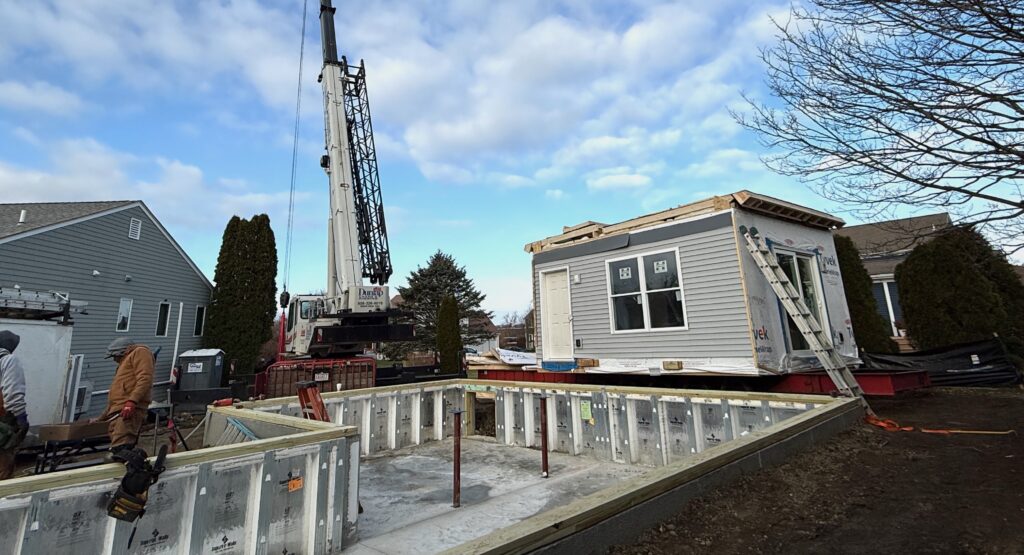
- A crane operator lifts modules onto the permanent foundation.
- Modules are aligned with precision and locked together.
- Roof systems is raised into place, and final weatherproofing is applied.
This “deliver & set” process typically takes just a matter of hours, drastically reducing exposure to environmental risks like rain or freeze-thaw cycles that can compromise site-built projects.
Step 4: Final Commissioning and Utility Tie-Ins
After the modules are set, contractors perform final tasks, including:
- Utility tie-ins for water, sewer, electric, and gas.
- Seam finishing, such as drywall touch-ups at module connections.
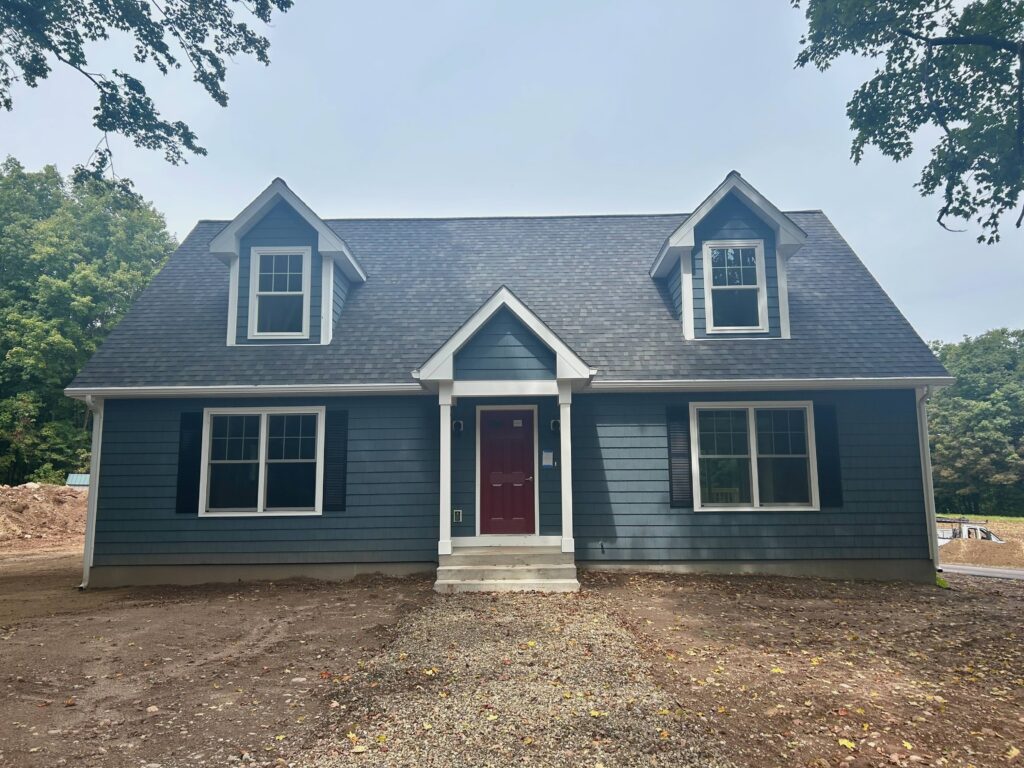
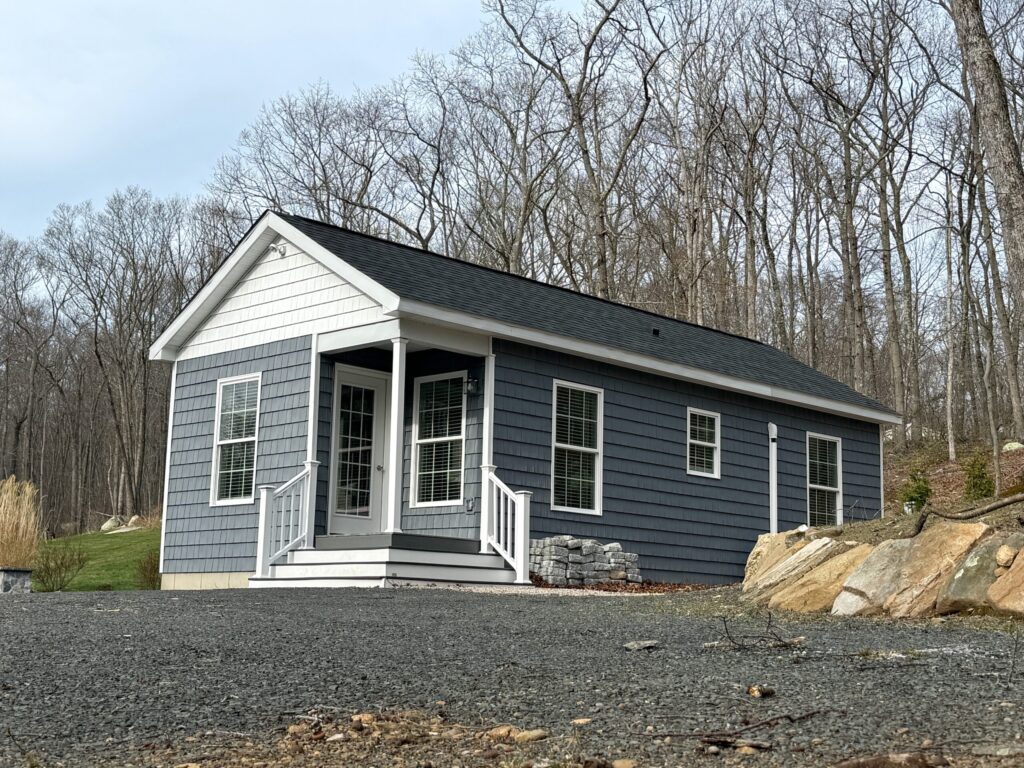
- Exterior cladding (vinyl siding or other finishes) and roof integration.
- Testing of HVAC systems, plumbing pressure, and electrical continuity.
This stage ensures that the home meets code compliance for the municipality and passes all final inspections.
Key Technical Advantages of Modular Construction
- Code Compliance: Built to the same International Residential Code (IRC) or International Building Code (IBC) as site-built homes, often exceeding standards due to transport requirements.
- Strength: Additional framing, adhesives, and fasteners make modules more resistant to lateral loads.
- Waste Reduction: Factory fabrication uses precision cutting, reducing material waste.
- Speed: Parallel workflows allow homes to be built far faster.
- Energy Efficiency: Tight construction tolerances improve air sealing, reducing heating and cooling loads.
Conclusion: Industrial Precision for Residential Living
Inside the factory, modular construction transforms homebuilding from a weather-dependent, labor-intensive process into a streamlined, engineered system. By applying principles of industrial manufacturing to residential housing, modular homes achieve greater strength, faster timelines, and higher quality control than many conventional builds.
As the industry advances, expect even more integration of automation, robotics, and advanced materials, pushing modular housing further ahead in durability and performance.