If you’ve been home shopping in Connecticut or Rhode Island lately, you’ve probably become a bit frustrated; there aren’t many homes on the market, and the good ones disappear seemingly overnight. It’s been hugely competitive as of late, which can be disheartening. When buying feels overwhelming or impossible, it gets folks thinking, “Maybe we should build instead?” And generally, upon exploring building costs and associated timelines, the next train of thought becomes, “Is modular a real alternative to stick-building?”
Here at Southern New England Modular Living, we aren’t just a dealer or agent for a particular modular home factory, we’re an independent, full-service turnkey home builder. We are constantly evaluating building lots and access roads through the lens of the Homebuyer’s plans, providing feedback and confirming project feasibility. We’ve seen perfect, textbook modular building opportunities, but we’ve also seen situations where stick-building made more sense.
In this article, we’ll break down modular homes vs. stick-built homes in plain English. We’ll speak to key characteristics and decision-drivers like cost, timeline, quality control, and building lot requirements, helping you to gain an understanding of which path may best suit your unique vision and property.
What’s the Difference Between Modular and Traditional Stick-Built Homes?
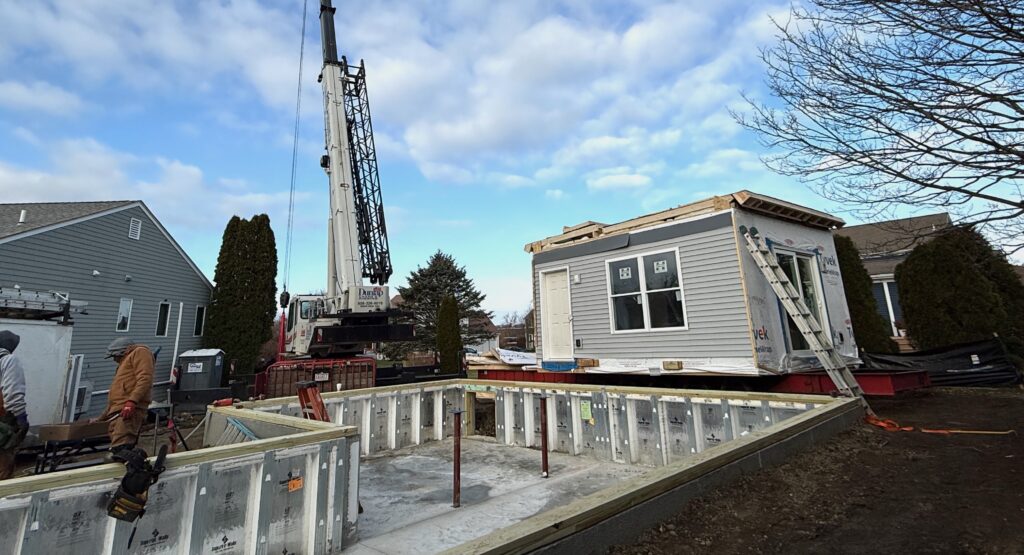
The primary difference between modular and stick-built homes is this: Modular homes are built in sections in a factory, transported to your property, then assembled like building blocks with a large crane. Meanwhile, stick-built homes are constructed entirely on-site.
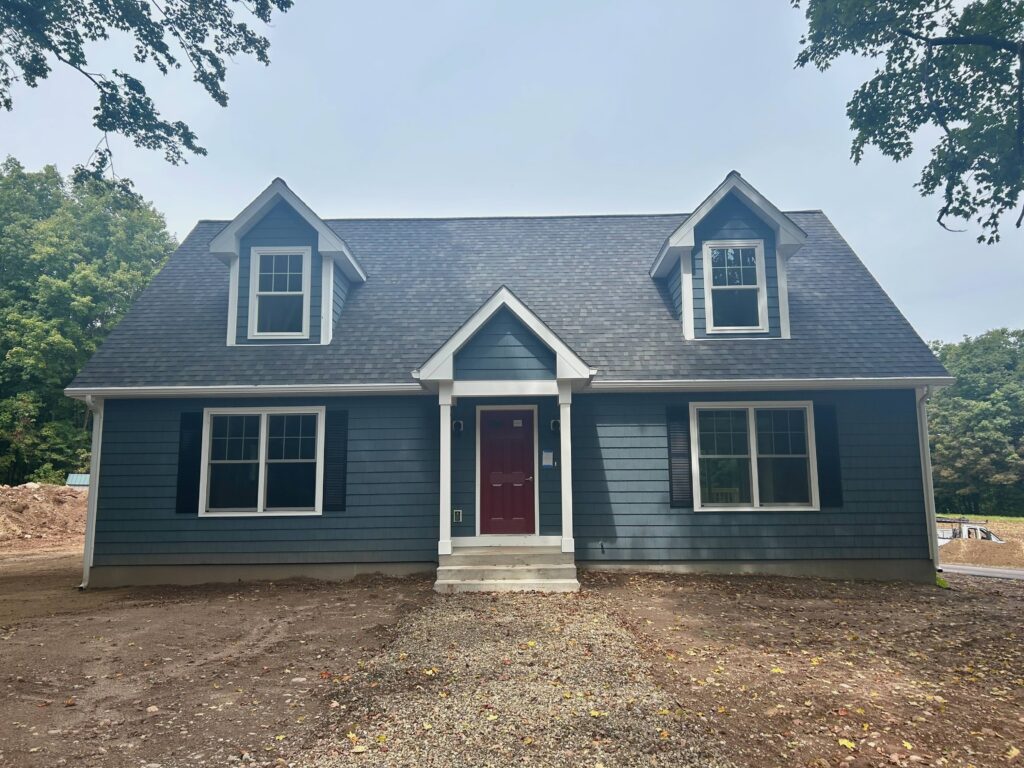
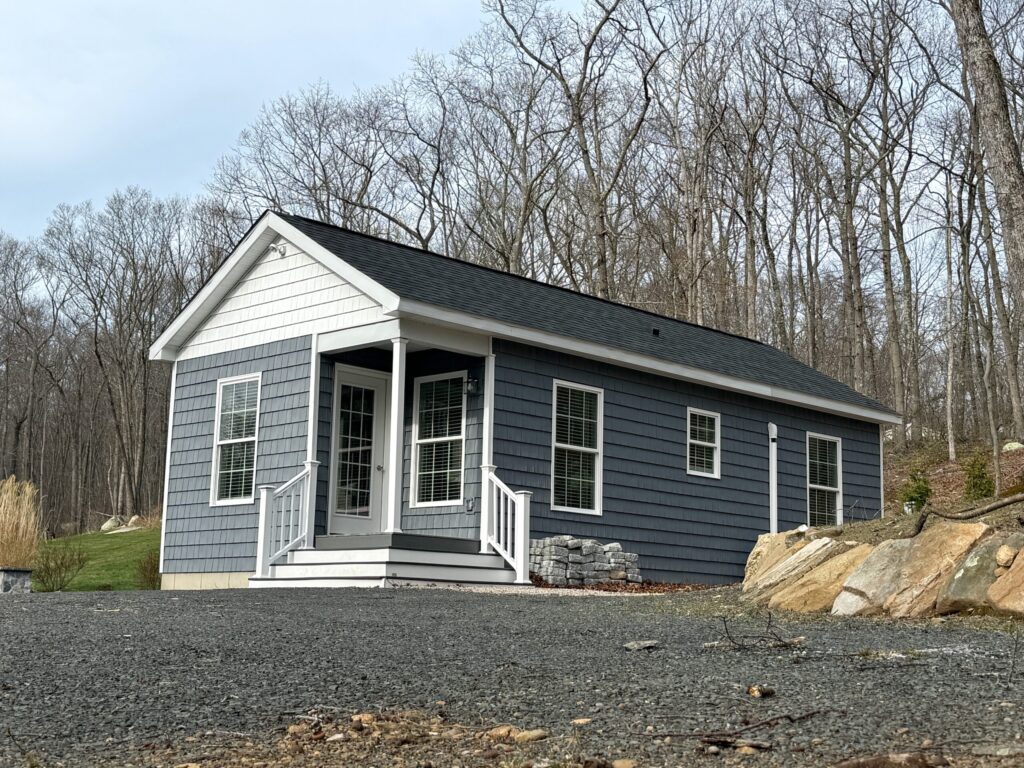
To the untrained eye, modular homes and stick-built homes are virtually indistinguishable. It’s only once we examine the construction methods themselves that the differences become more pronounced. The fundamental differentiator between the two is efficiency, the effective management of time and resources.
Time
Inside the modular factory, homes are built in sections [modules] by highly specialized laborers. As a result of this repeatability and division of labor, homes come together extremely quickly. While there is time associated with sourcing the individual components that will make up the house, the physical assembly process is completed in only a handful of days. This is in contrast to stick-building, in which progress milestones may be months apart. Modular construction allows for parallel processes; building lot prep (excavation, foundation, etc.) is completed at the same time the modules are on the assembly line, allowing time savings to compound.
Resources
With factory efficiencies come massively reduced labor costs. Plus, the modular factory’s rapid pace keeps their various component suppliers very busy; their buying power is tremendously strong, and the resulting savings trickle down to homebuyers.
Do Modular Homes Cost Less Than Stick-Built Homes in Connecticut & Rhode Island?
Homebuyers are often drawn to modular building by the promise of cost-effectiveness. This reputation is well-earned; the factory efficiencies outlined above will usually result in a lower budget for the home vs. stick-building, which may enable the homebuyer to allocate more budget to the areas of the build that really matter to them, whether that be interior details like premium kitchen cabinets and countertops, or additional site-built amenities such as garages, porches, decks, patios, and the like.
Are Modular Homes Lower Quality Than Stick-Built Homes?
Building materials are generally no different. However, in each respective method of construction, materials are handled very differently.
At the modular factory, materials remain clean and dry throughout the assembly process. Completed modules are then wrapped in waterproof Tyvek before leaving the climate-controlled factory space. This differs from a stick-build, in which materials are delivered in bulk to the building lot, then left exposed to the elements until the house is finally made weather-tight, which may take many, many months.
Over the course of a stick-build, wood will absorb moisture, dry out, and warp. As a result, there is a known, recognized “settling period” once the house has been completed, which may result in cracking or other issues. Modular construction, with its clean, dry materials and controlled handling, minimizes this risk.
Modular construction introduces a corporate level of quality control to homebuilding. Each module is inspected and scrutinized by quality control professionals at each and every step of the build process. Factory oversight encourages consistent quality from module to module. This is in contrast to site-builds, which generally abide by at-the-builder’s-discretion quality control procedures.
Modular vs. Stick-Built: Which is Right for My Property?
While modular construction does compare favorably in terms of cost, timeline, and quality control, there is one glaring constraint; not every building lot is modular-friendly. Modular homes must be transported from the factory to your property, which can pose challenges with difficult-to-access building lots. Steep, windy, narrow driveways or access roads may prove too much for a 50+ft transporter to navigate. While we make a point to pre-run the transporter route and confirm that delivery is indeed possible, there are other property-related considerations, too. Modular construction generally requires at least a quarter of an acre of clear, open space; there must be room for a large crane to level out (30’x50’), an area to stage the modules, as only one can be set atop the foundation at a time, plus ample buffer from powerlines, neighboring structures, and underground utilities. In tighter, more urban areas, stick-building often proves the only path to new construction.
When Stick-Built is the Better Option for Building in Connecticut or Rhode Island
While we can heap praise on the efficiencies of modular building, it’s no homebuilding cure-all. Sometimes the building lot itself will determine which path is right for you. Perhaps the terrain is too challenging for transporter access, or the lot is too small to safely host our crane. Beyond site constraints, there too are scenarios where the design flexibility of a stick build wins out. As stick-built homes do not need to be transported down the road like modular homes do, they do not need to comply with the same dimensional limitations. For example, take a single-floor, Ranch-style home. If stick-building, you may opt for high, 10’ ceilings, making the home feel grand. If building this same home as a modular, you’d be limited to 9’ ceilings, as 10’ modules wouldn’t clear the highway overpasses on the way to your building lot. To combat this limitation, modular home builds often employ vaulted or cathedral ceilings. While creative workarounds like this are aplenty, modular design limitations do indeed exist.
Modular homes and stick-built homes may be nearly indistinguishable once finished, but the respective journey to completion looks very different. Key process differentiators are timeline, quality control, cost, and, above all, how your unique building lot may accommodate a new home build.
Ultimately, the question isn’t so much which method of construction is “better.” It’s more about what makes the most sense given your property and your goals. In Connecticut and Rhode Island, site constraints often determine the most logical path forward long before floor plans do.
If your lot has the access, staging space, and clearance required for modular delivery and install via crane, modular construction can offer meaningful efficiencies. If your lot doesn’t meet the criteria for a modular build, stick-building may provide more flexibility. Either way, your decision as to how best to build should start with feasibility, not assumptions.
Now that you have an understanding of the differences between modular and traditional construction, you’re likely wondering how much a modular home may cost. Our Plan Your Build tool makes it easy to generate your own Preliminary Estimate; just select a Design Path, answer a handful of multiple-choice questions, and view your Estimate.
If you’d like help evaluating your building lot, get in touch! Whether connecting remotely or via an On-Site Consultation, we are happy to review your property’s access, grading, and staging requirements to determine whether modular or stick-building may be the better fit. Give us a call to schedule today.